

In conversation with three Indian fiction editors who have worked directly with book authors: Varun Prabhu (VP), Inderpreet Kaur Uppal (IU), and Devansh M. Desai (DMD).
Note: MS is an abbreviation that stands for manuscript, meaning the draft of a book which hasn’t been printed/published yet.
Questions
(click on any specific question to go directly to it)
- When should authors begin thinking about getting an editor?
- What are the types of editing, largely, that authors should know about?
- Can developmental editing be done after the first draft of the manuscript is complete?
- Are editing types and levels the same thing?
- What would be the ideal stage of writing to begin looking for a copyeditor and for a proofreader?
- What type of editing do most authors you’ve worked with need?
- If an author asks for a specific edit but they need a different type or level of editing, how do editors respond?
When should authors begin thinking about getting an editor?
VP. After writing, authors should ideally self-edit the manuscript until they’re sure that they cannot objectively edit any more. Only after that should they send the manuscript for editing purposes. First drafts should not be sent out to the editor. However, as the author self-edits in passes and goes through the drafts they are most satisfied with, an editor can be sought out and chosen/shortlisted.
IU. An author can think of an editor once the manuscript draft is complete and in the cooling or final stages. This gives time for the author to study various editors and their editing portfolios for a good fit for their book and the level of edits needed. A good editor is usually booked months in advance, so you can plan as you write.
DMD. Right from the get-go. An editor can often make for an excellent soundboard; authors might even get questions from the editor that help with their perspective—that open up new ways to approach things they wouldn’t have thought needed rethinking. But if they’re scared of constructive feedback early on, if they feel like the storyline could have major or minor changes or the direction could entirely change at any time and they don’t want to “burden” their editor, then perhaps after the first draft. As it’s said, with the first draft, at a minimum you have a proper look at the skeletal structure of your story or whatever you’re trying to do.
TGP’s Tip
Start researching editors while you’re still writing so when your story is done and/or you are tired of re-reading it, you don’t have to waste any more time 🙂
What are the types of editing, largely, that authors should know about?
VP. There are different types of editing where fiction is concerned. Substantive or structural editing where a plot’s structure, flow, consistency, loopholes, etc are checked. Then there is content editing (especially if content needs verification/research; historical fantasies, STEMLits, science fiction usually need this). For example, in historical fiction, you need to verify the accuracy of time periods. How dialogues are used, the worldbuilding, checking if the settings belong to that time period, etc. This comes during the substantial or developmental editing phase, before line editing is done. This service is usually not provided separately. Then there is line editing where the story is edited at line and paragraph level to check for consistency in style, flow of the language, etc. Copyediting is where grammar is checked. And the last one is proofreading, which deals with correcting errors that editing passes might have missed. There’s also developmental editing where editing is done simultaneously to writing the draft. This is more a combination of editing and coaching. However, developmental editing and substantive editing is interchangeable.
IU. Most authors understand that editing is just corrections and checking for mistakes like teachers in our schools. Authors are unaware of the type of editing needed for their work like substantive editing, copyediting, line editing, and proofreading, or even that manuscript critique is a good option if the story isn’t final but you don’t want the exhaustive inputs of a developmental edit for your work before you finalize your manuscript.
DMD. As far as I know, broadly there are three to four. And for some reason I have yet to fathom, proofreading happens to be a part of it. First comes developmental, big picture stuff—plot, character graphs, motives, resolutions. As I like to say — in simple words, it’s the big picture stuff. What’s the theme or the underlying theme; what subplots have been thought out and what do they contribute to the overarching narrative; do the characters make sense; should this (whatever it may be—one paragraph, one line of dialogue, one action beat, one story beat, one whole chapter, or more than any of these) be shortened, expanded, re-worded, or entirely removed. This is best undertaken when the writer is open to it. Then comes structural, macroscopic—what fits where on a chapter-to-chapter and/or page-to-page level; then line or copy-editing, covering grammar and narrative inconsistencies, and most important, the writing style—choice of words & phrasing, and syntax; and last, proofreading, repeated checking for anything & everything that slipped by both the writer and the editor’s radar—could be anything from simple spelling errors and mistakenly repeated words to misplaced or missing narrative chunks.
TGP’s Tip
For more details on each service and when exactly they all come in, click here to read the previous blogpost on this topic specifically.
Can developmental editing be done after the first draft of the manuscript is complete?
VP. Yes, that can be done. Developmental editing, in my eyes at least, is employed in the earlier stages of manuscript preparation. Different editors, though, might have a different understanding of the term, although the process of editing remains the same.
IU. Yes, it can be done if the author or editor feels dissatisfied with the way the story has turned out. At times, the reason can be errors or plot holes discovered by an astute editor as well.
DMD. Yes. If the writer is open to it. And I say so because at times it can involve absolutely gutting the author’s raw hard work, virtually like performing an autopsy on something that’s not technically a living being but is alive and a work-in-progress, and the work could get tedious as we go along because, like proofreading (and/or general, thorough checking & re-checking), we may have to keep going back to ensure things are falling into place and making sense. Which is why writers at this stage need to be sure they are absolutely ready for it.
Are editing types and levels the same thing?
VP. They are two different terminologies. Each type of editing has many levels and each level plays a different role in the process. The depth varies. However, these levels are more or less employed towards academic and nonfiction works. A fiction editor might not know of these levels and might combine all levels into one.
IU. No, the words are often used interchangeably, but the level is the amount of editing; whether light, or heavy, or medium in any specific edit type, i.e. proofreading, formatting, or line editing for an MS. So, one MS may use a medium level of copyediting and another may use a heavy version with major changes depending on the quality and proficiency of language and storyline.
DMD. I believe the levels pertain more to technical editing than creative, like for University-level academic/research papers, thesis material, journal publications etc., which makes sense—unlike fiction editing, those fields require a higher understanding of subject matter first, grammar second, or even third.
TGP’s Tip
Don’t try to search for editors who work on a specific level; send your manuscript for sample edits to a handful of editors, and decide after you’ve seen them all which one feels like the best version 🙂 Good editors will advise you right away on what type of service you need, and they’ll work on the level needed automatically (but in proportion to their charges, so always ask them for details about what things exactly they plan to do!)
What would be the ideal stage of writing to begin looking for a copyeditor and for a proofreader?
VP. The ideal stage to look for a copyeditor is after the developmental editing or substantive editing stage is complete. And a proofreader needs an edited [and typeset/formatted] manuscript.
IU. An editor, once the manuscript draft is complete and in the cooling or final stages. A proofreader is the final reader, so it should be the last step before publishing a book.
DMD. Ideally? When they’re confident with the finished draft, haha. This goes for both services. If not fully confident, then at least if their belief in the draft has breached the “Yeah, okay, I can handle any feedback I get for this” stage.
TGP’s Tip
Proofreaders’ work is best taken advantage of in a formatted (usually PDF) file, where each element of the book is laid out in the same way it will look after printing/publishing online.
What type of editing do most authors you’ve worked with need?
VP. It depends on how familiar the authors are with editing services. Most of my authors are conversant with the different editing terminologies and mostly ask for developmental editing services. There have been many others I have worked with who are not conversant. Although they do need developmental editing, they ask for proofreading or editing for grammar (they’re unaware or have very little knowhow of the term copyediting or line editing or developmental editing).
IU. In my experience, authors need heavy or medium copyediting, though they think they need proofreading because they aren’t aware of the differences in the edits. The command over the language (think rewriting large paragraphs) is also an issue that needs work for many authors.
DMD. So far, line editing. And to an extent, structural.
TGP’s Tip
If you’re not sure, ask at least three prospective editors which service they think your book needs. They’ll be happy to tell you once they’ve seen a sample from your book (generally, from the middle of it).
If an author asks for a specific edit but they need a different type or level of editing, how do editors respond?
VP. Like I said, many of my authors, especially at the start of my career, were ignorant of the different types and levels of editing. For many of them, editing means grammar edits or proofreading. These authors come asking for proofreading, and when I perform the sample edits, I come to know exactly what the manuscript needs. Most often, they need higher levels of editing as well. In this case, I educate them on what’s needed for the manuscript, and how only proofreading or copyediting won’t fix the issues in the manuscript. As an editor, my task is to explain to them as politely as I can without offending them. But, ultimately, I leave it to the author to decide what they need. Once they arrive at that decision, I do warn them (again nicely) that they will only be getting what they pay for. That I make it clear.
IU. An editor must first gently, politely let the author know that to meet ‘industry standards’ their MS needs more work than they think. Next, one must explain the type and level of editing required with examples from the MS. Many times, a sample edit is a good way to find out whether you [as the editor] are a good fit for the author and help the author understand the level of editing required. Some authors refuse to accept the suggestions and it’s okay to let them be. Our job is to suggest, not enforce; after all, it is the author’s book.
DMD. The one way I have dealt with this little bumper so far is I have edited and shown it to them, and if they like and prefer the edited version I’ll ask for their suggestions for any further revisions they want. If they don’t, and would rather that I do as tasked, I’ll try my best.
TGP’s Tip
Remember that editors do what they can do to make your book better. At the end of the day, none of their suggestions are intended to criticize you as an author; they intend only to help you improve your craft!
Collaborators
Varun Prabhu
Varun Prabhu is a storyteller at heart, working behind the scenes to help authors bring their manuscripts to life. As a ghostwriter and editor, he refines narratives and shapes compelling fiction, occasionally donning the hat of a cartographer to map out fictional worlds. He freelances under his brand, Urna Creative, offering creative support to writers navigating the publishing landscape.
Beyond the world of books, Varun is a voracious reader, a prolific writer, and a passionate TV show enthusiast. He’s also a cricket fanatic and sometimes displays a keen interest in politics.
Inderpreet Kaur Uppal
Inderpreet writes for her love of writing, edits manuscripts and reads endlessly. An authors’ editor with a decade of experience, she provides manuscript critique, linguistic editing, substantive editing, copyediting, and developmental editing for fiction and nonfiction. She enjoys romance, paranormal and contemporary fiction while ignoring horror, violence and gore. Inderpreet is the author of Generously Yours, We Women Wonder, Self-Editing, Editing, and Editors and has contributed a love story called “Love Paused” in The Blogchatter Book of Love.
She lives in the capital city of India, New Delhi, where she enjoys its rich culture, delicious street food, and a lit nightlife.
Devansh M. Desai
Devansh M. Desai is a relatively rookie book editor, active since July 2020, who works with both first-timers and established writers. He has edited three full-length books and a novelette so far, and strives to work on stimulating projects across the board. His preferred genres in fiction are thriller, contemporary, sci-fi and/or fantasy, and horror; and memoirs, auto/biographies, true accounts, and reference books (language & grammar) in non-fiction. He’s also edited résumés, CVs, SOPs, formal applications, blog posts, and some junior-level academic material. His USP—in his authors’ words—is his visually descriptive style and an understanding of storytelling that never fails to impress.
Devansh resides in southern Gujarat. When not working to better (or best) his writers’ manuscripts, he can be found binging shows, watching and critiquing films, listening to music, surfing the web or trying to read, watching some video essay on YouTube, or messing around on Canva.
ABOUT THE GREEN PENCIL
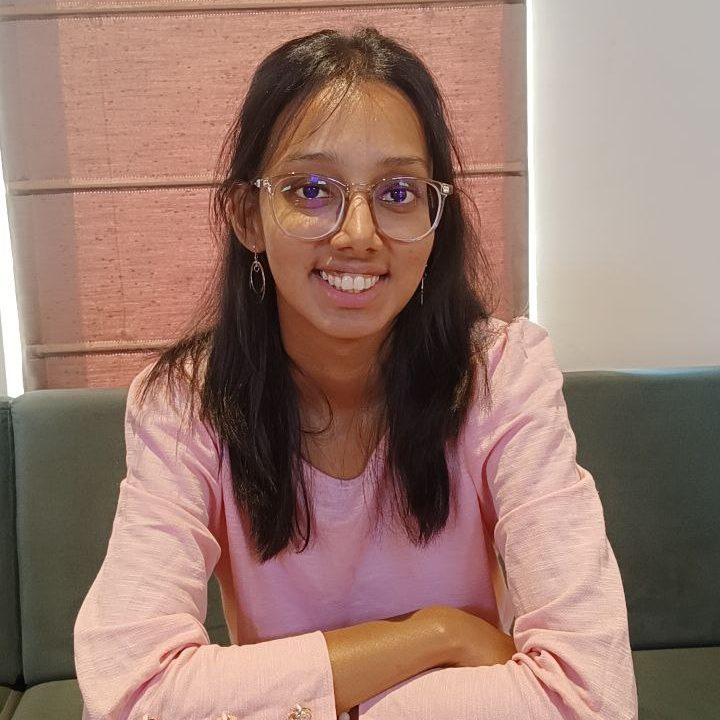
Hey there! I’m Shruti, a professional freelance copy editor and proofreader from Lucknow, India. I’m also the author of two self-published children’s mystery books.
The Green Pencil is my solo venture where I offer editorial services to help fiction as well as non-fiction authors (from India and other corners of the globe) elevate their writing from final draft to delivery-ready.
I particularly enjoy working on children’s fiction, adventure, and mystery books.
Like all editors, I genuinely want to see your book out there in all its glory, unblemished by errors of any kind; and I do not intend for an exorbitant fee that you can’t afford to come in the way of that!
I offer a free sample edit of up to 1000 words, so you, the writer, and I, your prospective editor, can both see if we’re a good fit for each other. If we are, I’ll offer you a customized cost estimate (quote) for your project.
Reach out to me today to get my custom quote for your book! 🙂
Cover image by Miguel Á. Padriñán: https://www.pexels.com/photo/two-white-message-balloons-1111368/

 THE GREEN PENCIL
Leave a comment